Tooth decay does not happen all at once. It usually develops slowly, often before you feel any pain. That is why regular dental visits matter so much. A cavity can start quietly, then progress into sensitivity, pain, infection, and even tooth loss if it is not treated.
At Ames Dentistry, we help patients understand what is happening inside their teeth so they can make confident decisions about care. This guide explains the stages of tooth decay, what symptoms to watch for, and how treatment changes depending on how far the decay has progressed.
What Is Tooth Decay?
Tooth decay happens when bacteria in the mouth feed on sugars and starches, creating acids that wear down the tooth surface. Over time, these acids can weaken enamel and create cavities. The CDC explains that cavities are caused by bacteria that stick to teeth and produce acid when exposed to sugar.
Decay can affect children, teens, adults, and seniors. It can happen on chewing surfaces, between teeth, near the gumline, or around old fillings.
Stage 1: Early Enamel Demineralization
The first stage of tooth decay begins when enamel starts losing minerals. You may notice a white, chalky spot on the tooth, but many people do not see or feel anything at this point.
This is the best stage to catch decay because the damage may still be reversible. Mayo Clinic notes that fluoride treatment may help restore enamel and sometimes reverse a cavity in the very early stages.
Treatment at this stage may include fluoride, improved brushing and flossing, dietary changes, and more frequent monitoring.
Stage 2: Enamel Decay
If mineral loss continues, the enamel can break down and form a small cavity. At this point, the damage is no longer just a weak spot. It has become a hole in the tooth structure.
You may still have no symptoms, or you might notice mild sensitivity to sweets, cold drinks, or brushing. Since enamel does not have nerves, pain may not be obvious yet.
A small filling is often enough to repair the tooth at this stage. The goal is to remove the decayed area and seal the tooth before bacteria move deeper.
Stage 3: Dentin Decay
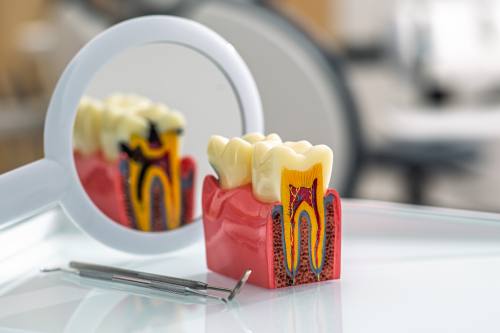
Beneath the enamel is dentin, a softer layer of the tooth. Once decay reaches dentin, it can spread more quickly. This is often when people begin to notice discomfort.
Dentin has tiny tubules that connect toward the inner nerve area of the tooth. MouthHealthy by the American Dental Association explains that when dentin loses its protective covering, heat, cold, acidic, or sticky foods can reach the nerves and cells inside the tooth.
Common symptoms at this stage may include sensitivity, pain when biting, or food getting stuck in one spot. Treatment may involve a filling, inlay, onlay, or crown, depending on how much tooth structure is affected.
Stage 4: Pulp Involvement
The pulp is the inner part of the tooth that contains nerves and blood vessels. When decay reaches the pulp, the tooth may become inflamed or infected.
This stage can cause more noticeable pain. You may feel lingering sensitivity to hot or cold, throbbing, pressure, or pain that wakes you up at night. Mayo Clinic explains that as tooth decay progresses, bacteria and acid can move through the tooth to the pulp, which contains nerves and blood vessels.
At this point, a regular filling is usually not enough. A root canal may be needed to remove the infected or inflamed pulp and save the tooth.
Stage 5: Abscess or Severe Infection
If decay is left untreated, infection can spread beyond the tooth root and form an abscess. An abscess is a pocket of pus caused by bacterial infection.
Symptoms may include severe tooth pain, swelling in the gums or face, a bad taste, fever, or pain that spreads to the jaw or ear. Cleveland Clinic notes that an abscessed tooth will not heal on its own and requires treatment from a dental healthcare provider.
Treatment may involve a root canal, drainage of the infection, antibiotics in some cases, or extraction if the tooth cannot be saved.
Tooth Decay Stages and Treatment Options
| Stage of tooth decay | What is happening | Possible treatment |
| Early enamel demineralization | Enamel is losing minerals | Fluoride, home care changes, monitoring |
| Enamel decay | A small cavity has formed | Dental filling |
| Dentin decay | Decay has reached the softer inner layer | Filling, inlay, onlay, or crown |
| Pulp involvement | Nerve tissue is inflamed or infected | Root canal and crown |
| Abscess or severe infection | Infection spreads beyond the tooth | Root canal, drainage, antibiotics, or extraction |
The earlier decay is found, the more conservative treatment can usually be.
Early Warning Signs of Tooth Decay
Tooth decay does not always hurt in the beginning. That is one reason people can have cavities without realizing it.
Watch for tooth sensitivity, pain when biting, visible dark spots, white chalky areas, bad breath, rough edges, or floss that tears in the same place repeatedly. If you notice any of these changes, schedule an exam before the problem gets worse.
What Causes Tooth Decay to Progress?
Decay progresses when bacteria, acids, and food particles remain on the teeth long enough to weaken enamel. Frequent snacking, sipping sugary drinks, dry mouth, poor brushing habits, and missed dental cleanings can all increase risk.
Certain factors can make decay more likely, including dry mouth, crowded teeth, old dental work, gum recession, certain medications, and a history of frequent cavities.
How Ames Dentistry Diagnoses Tooth Decay
At Ames Dentistry, we look for decay during routine exams, cleanings, and X-rays when needed. Some cavities are visible during an exam, while others hide between teeth or under old fillings.
Your dentist may check for soft enamel, visible staining, tooth sensitivity, bite changes, or signs of infection. X-rays can help reveal decay that is not visible on the surface.
The goal is to catch problems early, explain what we find clearly, and recommend treatment that protects as much healthy tooth structure as possible.
How to Prevent Tooth Decay
Preventing tooth decay starts with consistent daily habits. Brush twice a day with fluoride toothpaste, floss daily, and keep regular dental cleanings. Try to limit frequent snacking and sugary drinks, since teeth need time to recover between acid exposures.
Water is also helpful because it rinses away food particles and supports saliva production. Saliva naturally helps protect teeth from acid and decay.
If you are cavity-prone, your dentist may recommend fluoride treatments, sealants, prescription toothpaste, or a more personalized cleaning schedule.
Schedule a Preventive Dental Visit at Ames Dentistry
Tooth decay is easiest to treat when it is caught early. If you have sensitivity, tooth pain, visible staining, or you are overdue for a cleaning, Ames Dentistry can help you understand what stage the problem is in and what treatment makes sense.
Schedule a preventive dental visit with Ames Dentistry today. We will check for early signs of decay, explain your options clearly, and help protect your smile before a small issue becomes a bigger one.
FAQ: Stages of Tooth Decay
What are the first signs of tooth decay?
Early tooth decay may not cause symptoms. Some patients notice white spots, mild sensitivity, or rough areas on the tooth.
Can early tooth decay be reversed?
Yes, very early enamel demineralization may be reversed with fluoride and better home care. Once a cavity forms, it usually needs a filling.
How fast does tooth decay progress?
It varies. Diet, oral hygiene, dry mouth, genetics, and dental care habits can all affect how quickly decay worsens.
Does a cavity always hurt?
No. Many cavities do not hurt until they become deeper. That is why regular dental exams are important.
When does a cavity need a root canal?
A cavity may need a root canal when decay reaches the pulp and causes inflammation or infection inside the tooth.
What happens if tooth decay is ignored?
Untreated tooth decay can lead to pain, infection, abscess, tooth loss, and the need for more complex treatment.